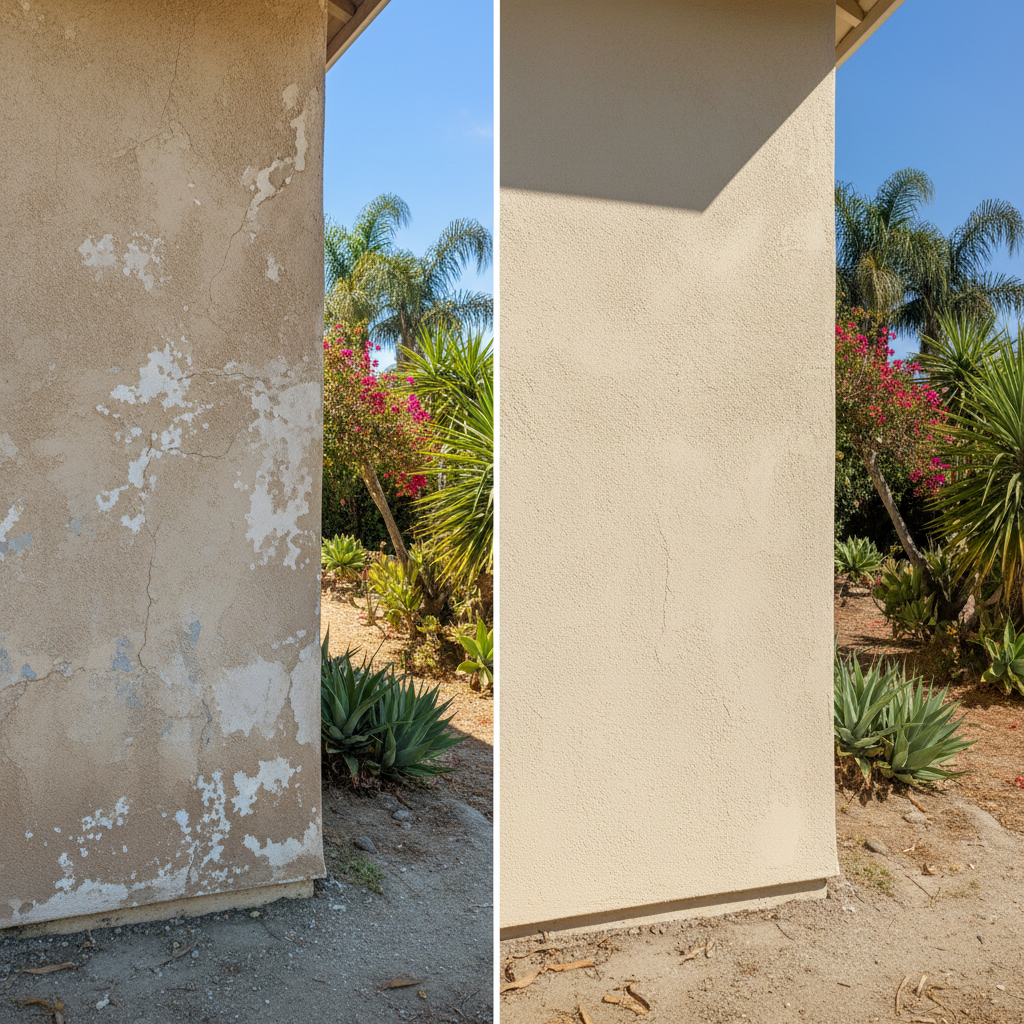
So, you’re looking into EIFS for your home here in Torrance. Maybe you’re building new, or you’re thinking about a big renovation. It’s a great system, offers fantastic insulation, and can look really sharp. But when it comes to putting it on your house, you’ve got two main ways to go: barrier EIFS or drainage EIFS. And trust me, picking the right one is a big deal, especially for how long your exterior will last.
What's the Big Difference?
Alright, let’s get straight to it. The core difference between barrier EIFS and drainage EIFS comes down to how they handle water. It’s all about moisture management, which is super important in any climate, but especially here in Southern California where we get those heavy, short rainfalls and then long stretches of dry heat.
Barrier EIFS: The Older Approach
Barrier EIFS, sometimes called traditional EIFS or conventional EIFS, is designed to be just that: a barrier. It’s a multi-layered system where the exterior finish itself is supposed to be waterproof. Think of it like a really thick, continuous skin over your sheathing. The idea is that no water gets in, period. It’s sealed up tight with caulk and flashing around all openings – windows, doors, penetrations for pipes or lights. If that seal is perfect, it works. The problem is, nothing stays perfect forever.
Drainage EIFS: The Smarter Evolution
Now, drainage EIFS (also known as EIFS with Drainage, or sometimes 'water-managed' EIFS) takes a different approach. It acknowledges that, eventually, some water will find its way past the outer layer. It’s just a fact of life with any exterior cladding. So, instead of fighting it, drainage EIFS is designed to manage it. It includes a drainage plane and a weep system behind the insulation board. If water gets behind the finish coat, it hits this drainage plane, runs down, and exits through weep holes at the bottom of the wall. It’s like having a backup plan for your backup plan.
Cost: Upfront vs. Long-Term
Let’s talk money, because that’s always a factor. Upfront, barrier EIFS is usually a bit cheaper to install. It’s a simpler system, fewer components, less labor involved in creating that drainage gap. You might save a few bucks on the initial bid.
But here’s where you need to think long-term. If water gets trapped behind a barrier EIFS system – and it often does, especially if a seal fails or a tiny crack develops – you’re looking at potential rot, mold, and structural damage to your sheathing and framing. Repairing that kind of damage? That’s where the real money goes. It can be a nightmare, requiring sections of the EIFS to be removed, repairs made, and then reinstalled. With drainage EIFS, because water can escape, those kinds of catastrophic failures are far less likely, saving you a ton of cash and headaches down the road.
Durability & Maintenance
Both systems are durable in terms of resisting impact and providing insulation. They’re tough. But when it comes to water durability, drainage EIFS wins hands down. It’s built to handle moisture. With barrier EIFS, you’re relying entirely on those seals and the integrity of the outer coat. You’ll need to be vigilant about inspecting and re-caulking around windows and doors every few years, maybe even annually, to prevent problems. If you miss something, you might not know you have a problem until it’s a big one.
Drainage EIFS still needs maintenance, sure. You still want to keep an eye on things, clean it, and make sure those weep holes aren't blocked. But the system itself is more forgiving if a little water gets in.
Appearance: No Real Difference
From the street, you won’t be able to tell the difference between barrier and drainage EIFS. Both systems offer the same aesthetic flexibility: smooth finishes, textured finishes, stucco-like looks, even architectural details like cornices and quoins. The visual appeal is identical. So, don’t let anyone tell you one looks better than the other; it’s what’s underneath that counts.
My Recommendation for Torrance Homeowners
Look, we live in a unique spot. We get those heavy, driving rains sometimes, especially during El Niño years, but then it can be dry as a bone for months. Our homes, especially some of the older ones in areas like Southwood or the Hollywood Riviera, are built to handle a certain amount of moisture, but not constant saturation behind a cladding. Plus, we’ve got that marine layer that can bring a lot of humidity. For these reasons, my clear recommendation for any homeowner in Torrance, CA, is to go with drainage EIFS.
It’s the safer, smarter, and ultimately more cost-effective choice for long-term performance. It’s designed for real-world conditions where perfection isn't always possible. You get the same great look and insulation benefits of EIFS, but with an added layer of protection against water damage that you just don't get with a barrier system.
When we do EIFS installations at Torrance Stucco & Plastering, we always lean towards methods that protect your investment for the long haul. Don't cut corners on something as critical as your home's exterior. Spend a little more upfront for drainage EIFS, and you'll sleep a lot better knowing your walls are protected.